18 December 2025

Watch the recording of the event

Public finance is shifting gear. That was on full display at UNEA-7 in Nairobi on 8 December 2025, where finance ministers spoke openly about how fiscal policy is changing. The Joint PAGE–CFMCA Co-Chairs’ Action Note, developed through collaboration between PAGE and the Coalition of Finance Ministers for Climate Action, captures this moment of convergence rather than announcing a finished roadmap.

The note points to an emerging direction. It shows how resilience and competitiveness are beginning to enter core fiscal discussions and how these debates are increasingly linked to circular economy objectives and inclusive growth. This was grounded in the joint session, Prosperity Through Resilience: Sustainable Public Finance as the Engine of Circularity, Competitiveness, and Inclusive Economic Growth, which focused on practical experiences rather than theory.

The session brought together finance and environment leaders from countries such as Brazil, Germany, Indonesia, and Uganda, alongside development leaders from UNEP and UNDP. What stood out was the shared message. Ministries of finance are no longer on the sidelines. They are central to shaping economic transitions that are sustainable, circular, and fair.

  • Dr. Sam Mugume - Co-Chair of the Coalition of Finance Ministers for Climate Action and Assistant Commissioner, Ministry of Finance, Planning & Economic Development, Uganda
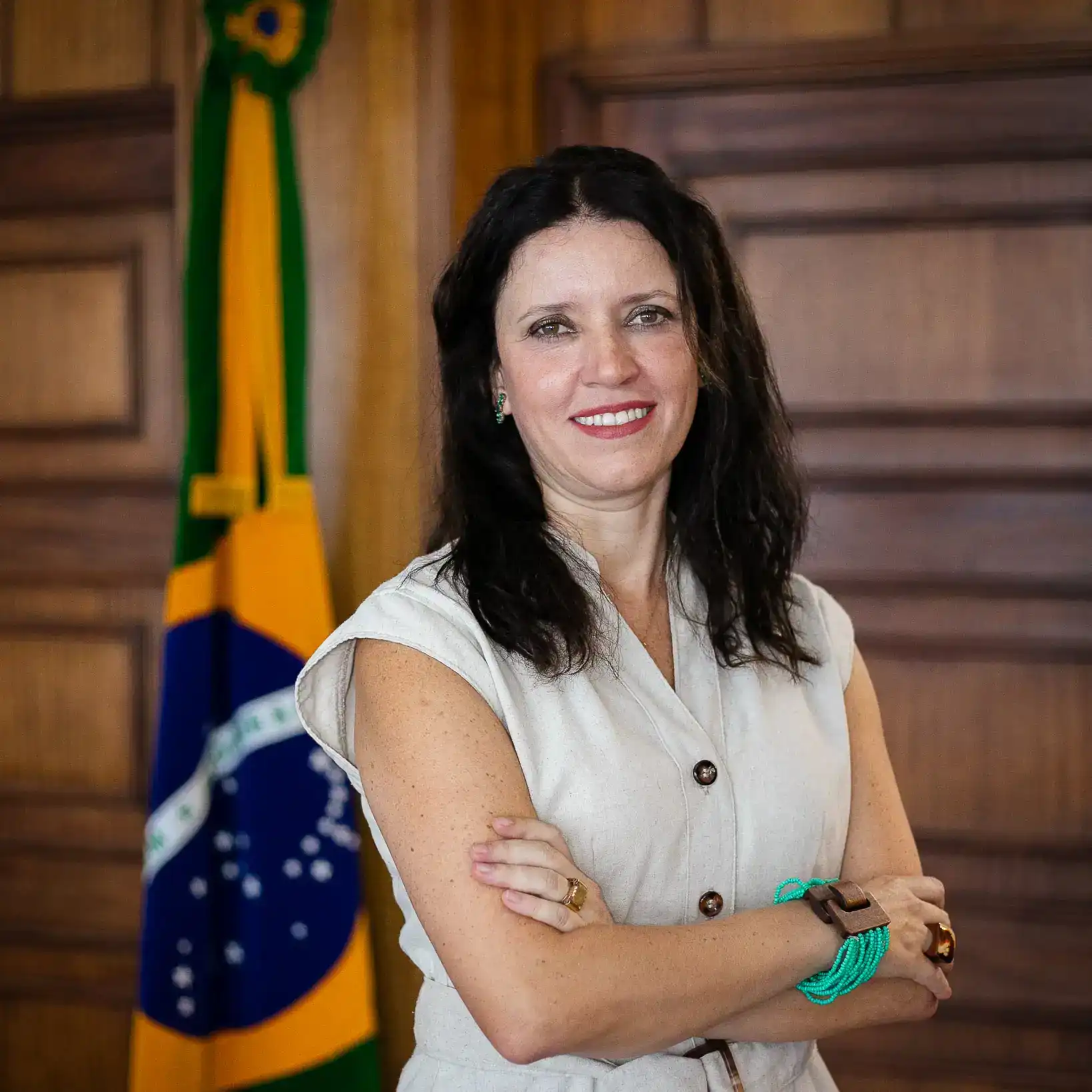
  • H.E. Ms. Cristina Fróes de Borja Reis - Extraordinary Secretary for the Carbon Market, Ministry of Finance, Brazil
  • Ms. Ilka Hirt - Deputy Director General, International Policy, Federal Ministry for the Environment, Climate Action, Nature Conversation and Nuclear Safety, Germany
  • Mr. Erik Teguh Primiantoro, Senior Advisor of the Minister of Environment for International Cooperation and Diplomacy, Indonesia
  • Mr. Timothy Scott - Senior Advisor, BPPS Planet Hub, United Nations Development Programme, and PAGE Management Board Member
  • Ms. Sheila Aggarwal Khan - Director, Industry and Economy Division, UNEP
  • Mr. Steven Stone - Chair, PAGE Management Board and Deputy Director, Industry and Economy Division, UNEP

The session landed on a hard truth, and the numbers back it up. Resilience is now a macroeconomic must, not an environmental extra. UNEP’s State of Finance for Nature shows it clearly. The fiscal costs of nature loss are already far bigger than what governments spend to prevent it. That gap isn’t theoretical. It hits budgets.

The picture from the International Monetary Fund tells the same story. Recent Global Financial Stability Reports show climate shocks are already messing with inflation control, raising sovereign risk, and shaking banking systems, especially in exposed economies. This is happening now, not in some future scenario.

Dr. Sam Mugume, Co-Chair of the Coalition of Finance Ministers for Climate Action and Assistant Commissioner at Uganda’s Ministry of Finance, in his keynote address stressed that countries with stronger environmental and social resilience will gain long-term competitiveness, while those that delay reforms face compounding fiscal and economic shocks. Tools such as sustainable finance taxonomies, environmental risk integration in banking, green budgeting, and circular economy strategies are emerging as the foundations of a new fiscal architecture.

Country examples from Brazil, Germany, and Indonesia made one thing obvious. The shift to resilient economies isn’t hypothetical. It’s already happening. Different contexts, same takeaway that sustainable public finance works.

From Brazil, Cristina Fróes de Borja Reis, Extraordinary Secretary for the Carbon Market at the Ministry of Finance, showed how the Ecological Transformation Plan hard-codes sustainability into macro planning. Instruments like sustainable bonds and taxonomies aren’t decorative. They’re pulling real capital into inclusive green growth.

Germany brought a different angle. Ilka Hirt, Deputy Director General at the Federal Ministry for the Environment, spoke frankly about working in low-growth conditions. The response there is discipline. Legally binding climate targets, national adaptation planning, and sustainable finance strategies that protect financial market stability.

Indonesia closed the loop. Erik Primiantoro, Senior Advisor to the Minister of Environment for International Cooperation and Diplomacy, shared how solid legal frameworks and cross-sector teamwork are scaling green budgeting, environmental funds, risk-based banking rules, and community-focused environmental insurance.

Across diverse contexts, the common lesson was clear: resilience requires coordinated governance, long-term planning, and consistent political will—particularly when reforms challenge entrenched incentives. Finance ministers are not just endorsing sustainability; they’re driving it forward.

Panelists emphasized that finance–environment coordination is no longer optional. Strong governance mechanisms, transparent stakeholder processes, and harmonized budget and planning systems are crucial to sustain reform momentum, navigate modeling uncertainties, and ensure that climate and nature risks are reflected in fiscal decisions. The role of data and shared methodologies to help reduce uncertainty was emphasized.

Participants also highlighted persistent challenges such as adaptation finance tagging, youth engagement, short-term fiscal pressures, and the need to account for environmental losses in conflict-affected settings.

The launch of the PAGE–Coalition Co-Chair’s Action Note, A Shared Aspiration: Prosperity Through Resilience, reflects a growing convergence of ideas shaping the global agenda for 2026 and beyond. Rather than setting out new commitments, the Action Note points to three areas where countries and partners are already aligning efforts:

  1. Updating fiscal guidance for Ministries of Finance.
    Building on the Coalition’s Guide, the Action Note points to expanding existing fiscal frameworks to better integrate adaptation, nature, and industrial policy, helping finance ministries manage climate and nature risks within routine budgeting and investment decisions.
  2. Building institutional capability through applied support.
    Platforms such as the PAGE–Makerere initiative anchor capacity development in African institutions, enabling regional ownership of learning and analysis. This is complemented by targeted support from the Sustainable Public Finance Hub to address concrete analytical and coordination needs of Ministries of Finance.
  3. Connecting fiscal reforms to investment pipelines.
    The note highlights efforts such as the GEF Net-Zero Nature-Positive Accelerator and Germany’s IKI FAST as ways to link upstream policy reforms with financeable, climate- and nature-aligned investments.

Taken together, these elements reflect a gradual shift from broad commitments to more practical pathways for implementation, supporting governments as they work to strengthen inclusive, resilient, and competitive economies over time.

As moderator, Mr. Steven Stone, Chair of the PAGE Management Board, noted that aligning fiscal planning with sustainability goals is increasingly a defining feature of modern economic management. Tools like sustainable finance taxonomies and integrated risk assessments help set common rules across ministries, markets, and institutions. That shared language matters, as it reduces friction and speeds up decisions.

Ms. Sheila Aggarwal Khan, Director of UNEP’s Industry and Economy Division, concluded by stressing that resilience is no longer an abstract concept but a core macroeconomic asset, reflected in lower cost of capital, stronger fiscal buffers, more stable public revenues, and greater capacity to absorb shocks without undermining growth or social cohesion.

Put simply, resilience has become a foundation for long-term competitiveness and social stability. Countries that move early are better placed to manage risk, attract investment, and keep prosperity going, even as uncertainty becomes the new normal.

Share Prosperity Through Resilience: Leveraging Public Finance For Sustainable Growth
Scroll to top